

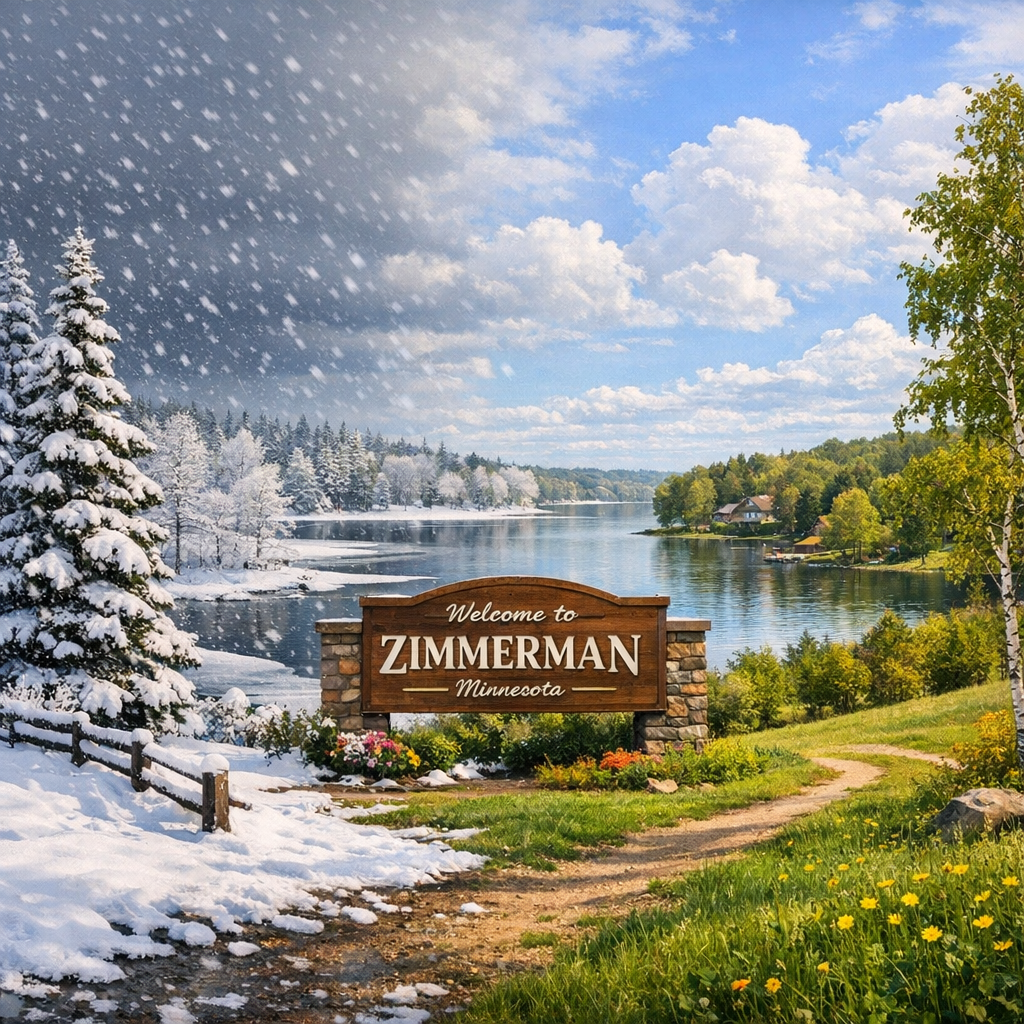
Zimmerman, Minnesota, experiences a diverse range of weather conditions throughout the year, characteristic of a humid continental climate. Understanding these patterns can help residents and visitors prepare for seasonal changes and appreciate the natural environment.
Seasonal Temperature Variations
The warm season in Zimmerman spans approximately from May 19 to September 17, with average daily high temperatures exceeding 70°F. July stands out as the warmest month, boasting an average high of 81°F and a low of 61°F. Conversely, the cold season lasts from November 26 to March 3, during which daily high temperatures remain below 34°F. January is typically the coldest month, with average lows around 6°F and highs near 23°F.
Precipitation and Snowfall
Zimmerman receives an average annual precipitation of approximately 31.37 inches. The majority of this precipitation occurs during the growing season from May through September, aligning with the influx of moist air from the Gulf of Mexico. Winter months contribute to the annual snowfall, averaging around 45 inches, providing ample opportunities for winter sports and activities.
Environmental Impacts of Climate Change
Climate change is influencing Minnesota’s natural environment, including areas like Zimmerman. Warming temperatures and shifting weather patterns threaten native species such as paper birch and walleye. Additionally, ice coverage on lakes has declined by an average of 10-14 days over the past 50 years, affecting winter activities and aquatic ecosystems.
Preparing for Seasonal Changes
Residents can adapt to Zimmerman’s climate by staying informed about seasonal forecasts and preparing for temperature extremes. In winter, ensuring proper insulation and heating systems is crucial, while summer months may require measures to stay cool and hydrated. Engaging with local environmental initiatives can also help mitigate the impacts of climate change on the community.
By understanding and anticipating Zimmerman’s weather patterns, residents can better appreciate and navigate the unique environmental characteristics of the region.