

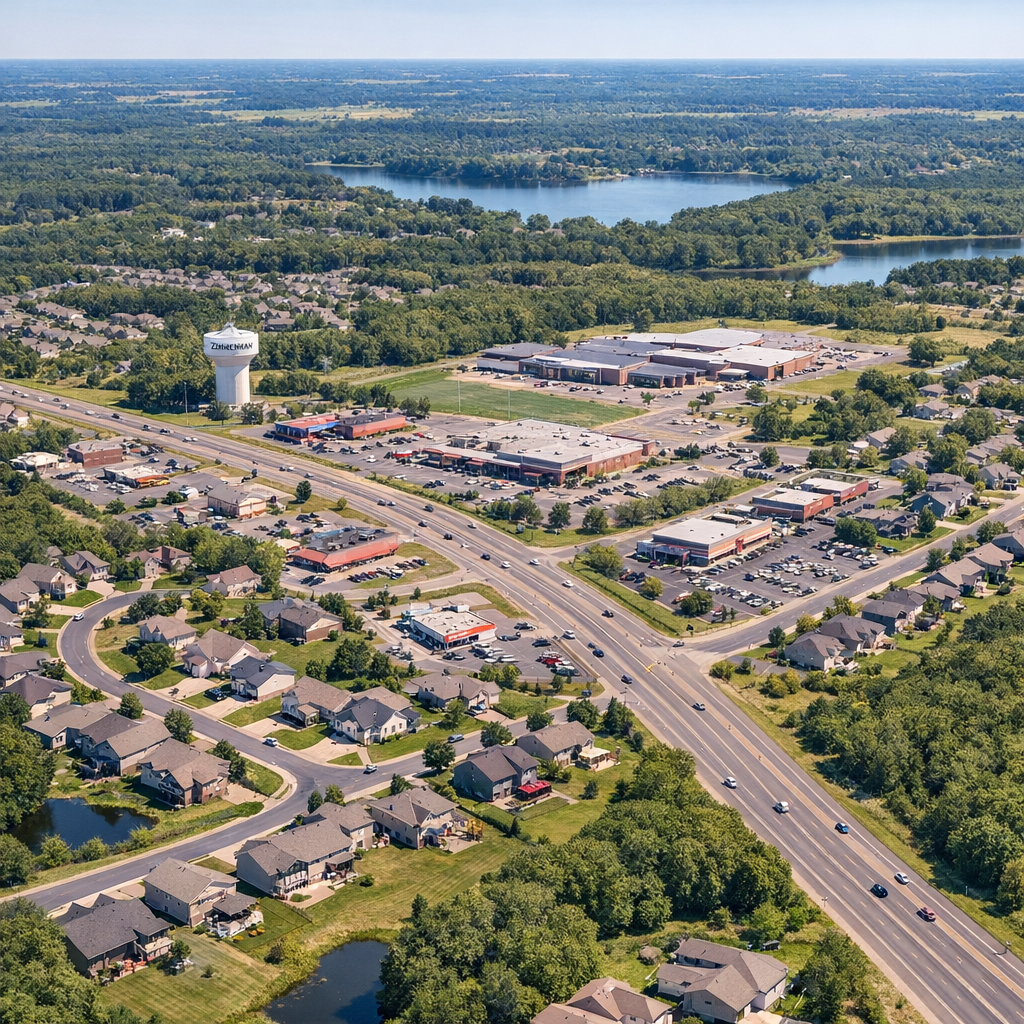
Zimmerman, Minnesota, a city in Sherburne County, has been experiencing significant economic growth and development in recent years. This article provides an overview of the current economic landscape, highlighting key trends in housing, employment, and local industries.
Housing Market Trends
The housing market in Zimmerman has shown remarkable growth. As of April 2026, the median listing price for homes reached $427,670, marking a 13.07% increase from the previous year. The median sold price was $385,000, reflecting a 12.08% year-over-year rise. Additionally, the median price per square foot stood at $224, up 14.29% from the prior year. These figures indicate a robust demand for housing in the area.
Employment and Industry
The local economy employs approximately 3,600 individuals, with the largest sectors being manufacturing, health care and social assistance, and other services. Notably, the manufacturing sector employs 733 people, while health care and social assistance account for 585 employees. The highest-paying industries include public administration, wholesale trade, and utilities, offering average annual salaries of $101,852, $86,027, and $80,917, respectively.
Population Growth
Zimmerman’s population has been steadily increasing. In 2026, the city reached a population of 7,034, growing at an annual rate of 1.9%. This growth reflects the area’s appeal and the opportunities it offers to residents and businesses alike.
Digital Infrastructure and Innovation
Zimmerman has embraced digital transformation, enhancing its appeal to tech startups and remote workers. The expansion of high-speed internet has facilitated the growth of businesses specializing in green technology, agricultural data analytics, and logistics automation. This digital infrastructure has empowered local entrepreneurs to operate globally while maintaining a local presence, contributing to the city’s economic diversification.
In summary, Zimmerman’s economic landscape is characterized by a thriving housing market, a diverse employment sector, and a commitment to digital innovation. These factors collectively contribute to the city’s ongoing growth and prosperity.