

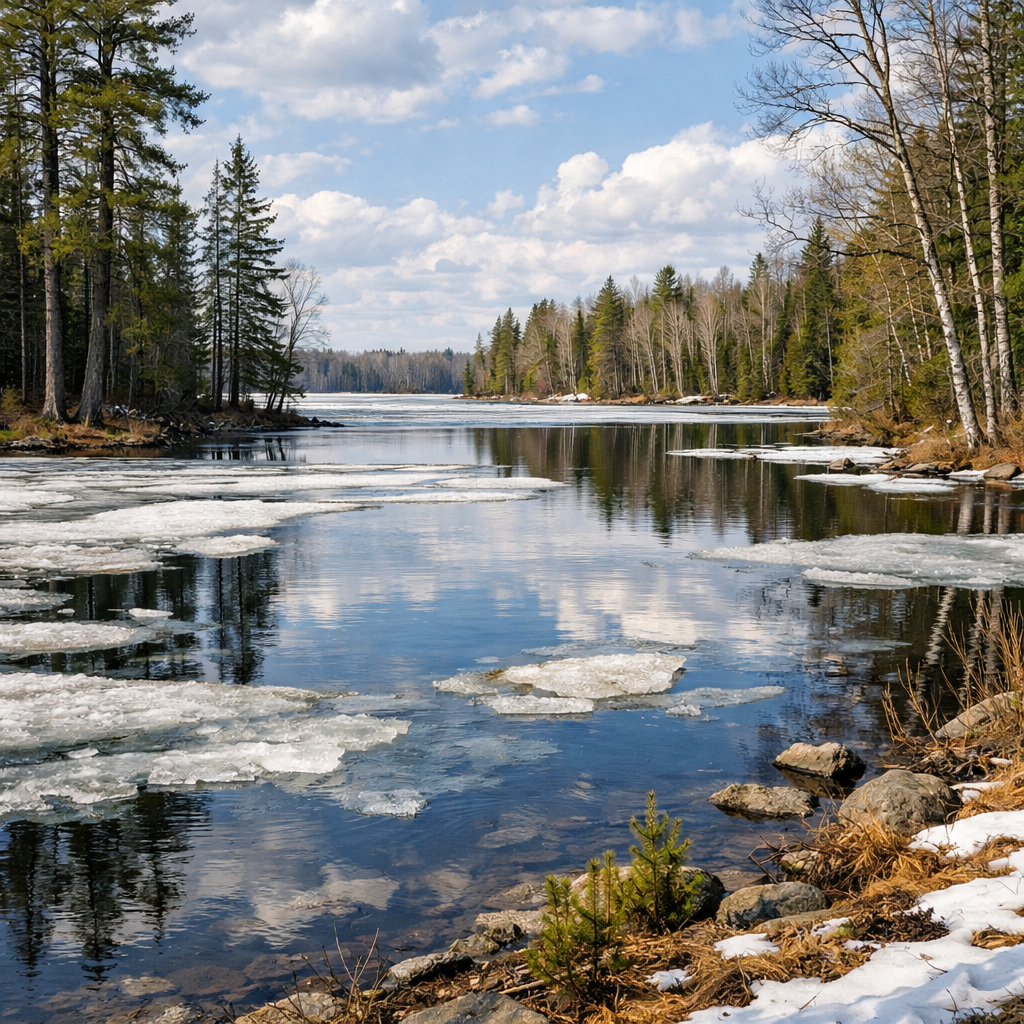
Zimmerman rests comfortably amid Minnesota’s transition zone — where northern forests meet prairie-influenced climate systems. As we keep watch on the sky, snow, and forest edge, simultaneous changes are happening in temperature, precipitation, lake behavior, and wildlife that affect all who call this place home.
Warming Winters, Shorter Ice Seasons
Our winters aren’t what they used to be. Across Minnesota, winter temperatures have been rising significantly — winter lows are growing milder, snow cover is thinner, and the pattern of lengthy frozen lakes plus deep snow is shrinking. In many lakes, including those near Zimmerman, ice forms later in fall and melts earlier in spring. That shift of ice‐in and ice‐out dates by several days each decade is affecting winter recreation, shoreline safety, and ecology beneath the ice.
Heavier Rains & More Variable Precipitation
Zimmerman has long lived with wet springs and bursts of summer showers. But the intensity and frequency of heavy rainstorms are increasing. When these downpours fall, runoff rises fast, local watercourses swell, and flood risk grows — especially where natural buffers like wetlands or woods have been reduced by development. Between heavier storms, soils may dry out, stressing trees, lawns, and crops alike.
Forest Composition & Wildlife on the Move
The forests around us are adapting to milder winters and warmer summers. Trees native to colder northern regions — like spruce, fir, birch, and aspen — are slowly retreating northward or losing ground to more heat‐tolerant species such as maples, oaks, and hickories. These botanical shifts ripple through the wildlife community: some cold‐water fish struggle as lakes warm, while birds and insects tied to these trees face mismatches in timing for nesting or feeding.
Health, Insects, & Lake Concerns
Longer warm periods also mean longer seasons for mosquitos, ticks, and algae blooms. For Zimmerman lakes, warmer water and nutrient runoff create ideal conditions for excessive algae, which can reduce oxygen in water, hurt fish, and pose health risks for swimmers. Tick activity is also increasing as climates become more hospitable for the pests and their hosts.
What Action Looks Like Locally
- Preserve and restore natural buffers — wetlands, wooded shorelands, riparian vegetation — to slow runoff and protect water quality.
- Monitor lake ice reliably (ice‐in and ice‐out), algal blooms, and new insect or bird arrivals — community science can help track these shifts.
- Choose tree species suited to future climate conditions for planting in yards, parks, or along streets.
- Design infrastructure to handle greater precipitation—better drainage, stormwater systems that manage sudden surges of water.
While these changes are happening gradually, their effects accumulate. Being observant about local weather trends—ice conditions, rainfall, wildlife—is more than curiosity. It’s part of caring for Zimmerman’s landscape and the generations who’ll walk these woods, swim its lakes, and farm the land.
— James Larson